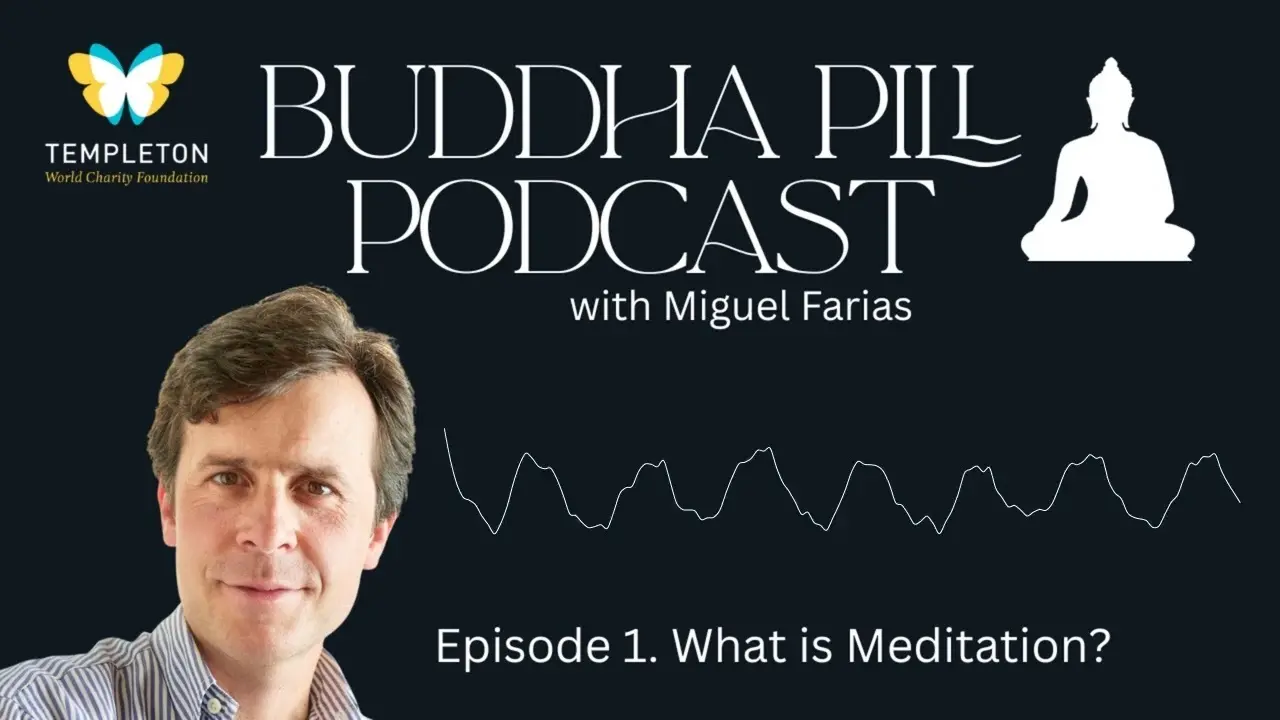
This audio series explores the rich diversity of one of humanity’s oldest practices: meditation.
Listen with the below player
While meditation has become mainstream, most public attention has gone to mindfulness and other Buddhist-derived practices. The From the Heart project, which Farias leads with the co-direction of Inti Brazil of Radboud University, , takes a different path, studying Christian and Islamic forms of contemplation while keeping their original spiritual structures intact rather than treating them as secular mindfulness exercises.
For Farias, the podcast was a way to bring these questions to a wide audience. In discussing the series with TWCF, he described meditation as more like “a wild tropical forest” than a single, uniform practice: full of different techniques, aims, histories, and experiences.
Contemplative practices have taken many forms across history and across traditions. Some use breath, repetition, prayer, sacred images, movement, or ritual. Some aim at concentration or emotional balance; others at compassion, moral growth, communion with God, or freedom from self-centered concerns. What they share is a long human effort to ask how to live, who we are, and what real change in a person involves.
The episode opens by questioning some familiar assumptions: that meditation is mainly about feeling happier, emptying the mind, or picking up a simple wellness habit. Farias argues these ideas capture only a small part of a much larger field.
"We need to start thinking about meditation in a different way," Farias says. "We are carrying around ideas and stereotypes that have failed to help us understand the practice that humans have been engaging in for at least 4,000 years."
This episode features contributions from:
One difference running through meditation’s many forms, Farias notes, is between those who understand it as “a religious or spiritual activity” and those for whom it has “nothing to do with religion whatsoever.” Rather than treating religious and secular approaches to meditation as separate, the episode asks what shifts as practices move across contexts.
Swami Ambikananda, who has meditated daily for more than forty-five years, describes an experience that resists easy explanation: in a good session, she says, “all of it drops away, including yourself.”
Ivana Burić, who studies mindfulness scientifically, points to the different purposes meditation has served across time. “Traditionally, these techniques were developed to promote transformations of the self in the sense of making people less interested in themselves and more interested in others,” she says.
And David Brazier, reflecting on how mindfulness has traveled from Buddhism into Western life, observes that “there has been almost a reversal really in the meaning.”
Together, these perspectives raise a question that runs through the whole series: What changes when meditation is understood not only as a technique, but in relation to the traditions, purposes, and larger visions of what it means "to live well" that have shaped it?
Farias told TWCF that the audio series was “deeply inspired by the vision of SoRSE, TWCF's Science of Religious and Spiritual Exercises initiative. Rather than studying "watered-down or secularized versions" of these practices, SoRSE looks at them as they are actually practiced within their traditions, bringing researchers and practitioners together to study their effects.
Across the four episodes, Farias looks at where spiritual and secular forms of meditation overlap and where they differ. The differences, he says, are real — not only in their goals (wellbeing and self-improvement, or "a radical transformation of the self beyond ordinary concerns") but in what each tradition treats as "the good or authentic life." The series takes these tensions on directly, at one point comparing an evolutionary account of the limits of compassion with the boundless compassion many religions hold up as an ideal.
In the next episode, The Buddha Pill travels across traditions, places, and historical periods to explore the remarkable varieties of meditation practice — and asks whether practices that look very different may nevertheless share something essential.