A new short film and set of illustrations: THRIVE in the words of young people living with HIV
Supporting sustained mental health and wellbeing is increasingly recognized as essential to achieving positive health outcomes for children and adolescents living with HIV (CALHIV). Yet too often, existing mental health tools fail to capture the experiences and priorities of the young people themselves.
Zvandiri is a peer-delivered mental health intervention that supports CALHIV by fostering character strengths grounded in the indigenous concept of Zvandiri, meaning “Accept Me as I Am.” Developed in Zimbabwe and now adopted or localized in 13 other African countries, the program has demonstrated — through trials, qualitative research, and programmatic evidence — that sustained psychosocial support can improve viral suppression among adolescents living with HIV. Zvandiri has been recognized by the World Health Organization (WHO) as a best-practice model and is now integrated into Zimbabwe’s national guidelines and plans. Research into this intervention has been funded in part by Templeton World Charity Foundation.
From listening to CALHIV engaged in the program, researchers have been gathering evidence consistently emphasizing that the person-centered, differentiated mental health support provided by Zvandiri during adolescence is a key factor in achieving sustained viral suppression and relatively buoyant mental health in spite of the challenges they face.
Between 2022 and 2024, extensive qualitative and quantitative research was conducted, including interviews with Zvandiri beneficiaries (n=58, aged 10–24 years, 60% female), peer counsellors (Community Adolescent Treatment Supporters, or CATS) (n=80, aged 18–24 years, 50% female), mentors and staff (n=19, 85% female), and caregivers (n=6, 50% female).
Through a process of collaborative thematic analysis with participants also serving as co-authors, the research identified six core constructs that underpin what young people living with HIV described as "thriving.” They are: Connectedness, Self-acceptance, Hope, Self-efficacy, Purpose, and Flourishing.
To illustrate how these constructs intersect and contribute to positive mental health, the team worked with CALHIV to co-develop a composite narrative based on the interview findings that became the basis for a short film. Zimbabwean artist Lomedy Mhako also collaborated with the research team to translate the words of participants into six vivid illustrations, each representing one of the core constructs.
Together, these creative outputs highlight the power of peer-delivered mental health and psychosocial support and demonstrate how visual and narrative tools can help capture the lived realities of young people, often in ways that traditional methods may not fully convey.
The above text was adapted from an abstract/poster presented at the AIDS Impact Conference 2025
Authors: Sarah Bernays, Joni Lariat, Rufaro Mbundure, Laura Kafata, Leviticus Makoni, Pueshpa Shaba, Sharon Sibanda, Obey Mdala, Blessed Mazvikite, Mary Phiri, Ethel Manyerere, Abigail Mutsinze, Vivian Chitiyo, Victoria Simms, Frances M. Cowan, Webster Mavhu, and Nicola Willis.
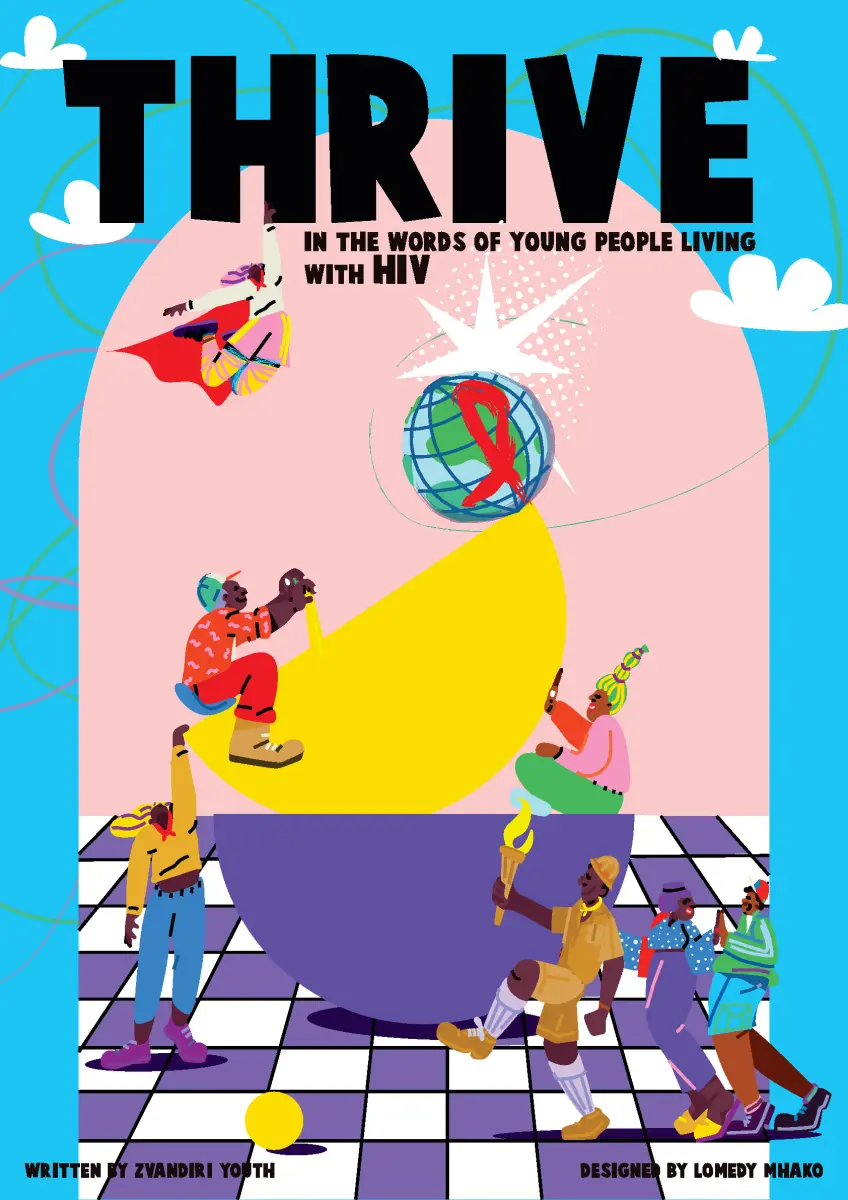
Learn more about the TWCF-funded project: The Zvandiri (As I Am) Character Strength and Its Constructs among Adolescents Living with HIV in Zimbabwe
Read our Q&A with Webster Mavhu, Sarah Bernays, and Nicola Willis
Dr. Webster Mavhu is Deputy Director at Centre for Sexual Health & HIV/AIDS Research (CeSHHAR) Zimbabwe. He has a keen interest in adolescence and masculinities and leads the CeSHHAR ‘Masculities Research’ portfolio. In 2021, Dr.Mavhu was promoted to Reader at Liverpool School of Tropical Medicine; this is a joint appointment with CeSHHAR.
Dr. Sarah Bernays is a Global Public Health academic at London School of Hygiene & Tropical Medicine and the University of Sydney specializing in infectious diseases, sexual health and community engagement with young people.
Nicola Willis is the Executive Director of Zvandiri. In 2004, together with young people living with HIV and a group of volunteers in Harare, she established Zvandiri. She's Co-Chair of the World Health Organization (WHO)’s Technical Working Group for Adolescent HIV Service Delivery and is a member of WHO’s HIV Guidelines Committee.