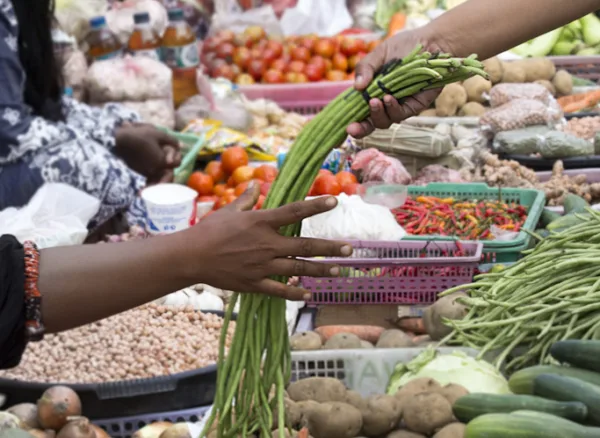
What happens when you stop fearing and fighting against diversity, and start exploring and embracing difference?
In this episode of Stories of Impact podcast, Kurt Shaw and Rita da Silva of Usina da Imaginação discuss how shared expressive creativity fosters connections and helps to bridge social and economic divides.
Listen with the below player
For more than 20 years, Kurt Shaw and Rita da Silva have used art, creativity, and play to bring people together across divides. Through Usina da Imaginação, the organization they co-founded and co-direct, they and their team members across Brazil collaborate with young people and families on the margins of society to tell their stories through short films, music, comics, and other art forms. Usina’s work aims to promote racial and gender equity, build intergenerational bonds, and the org also advocates for early childhood, aiming to influence public policies that shape urban life.
When you're steeped in academia, Shaw says, there's often "the sense that serious and important are synonyms. In Brazil, one comes to learn that playful and important are synonyms, and that shift in perspective is so tremendously important. All of my years studying Hebrew and Greek and Coptic — that seriousness actually brought me much less fulfillment and much less encounter with the other than, than play did."
A native of Brazil, da Silva grew up immersed in the nation’s rich, playful culture. Play, she explains, is central to connection and survival. “We are all the time looking for the other person and call this person to play with us. Playing outside, playing together — we open the house so people come, drink, play, sing, compete, make music, and move. It is not a party just to have fun, but to bring people together to make something happen.”
This vibrant culture of play, she says, has helped Brazilian communities thrive despite hardship. “We are all the time playing some popular art in the street. Not only art, but culture is a way to show you are not the same as the other. You have something to offer, a way to connect. It’s so important to learn with the body, not only with your mind, and also to understand you are not alone in this world.”
Da Silva points to the creative resilience of quilombos — communities formed by people of African origin who escaped Brazil’s transatlantic slave trade. “Brazil is a huge country with many kinds of Indigenous people, Black communities, quilombos. They have lived in very difficult situations for a long time, resisting. And if they are resisting, they are creating the best way to show what they have to offer for the other.” Shaw adds that Brazil has a long history of transforming conflict into beauty. Capoeira began as a martial art of resistance, evolved into gang combat, and today thrives as a competitive dance. Samba, too, channels rivalry between favelas into elaborate costumes, music, and performances that celebrate cultural pride.
With support from Templeton World Charity Foundation, Shaw and da Silva have expanded Usina’s work in ways that deepen both the practice and the philosophy of connection.
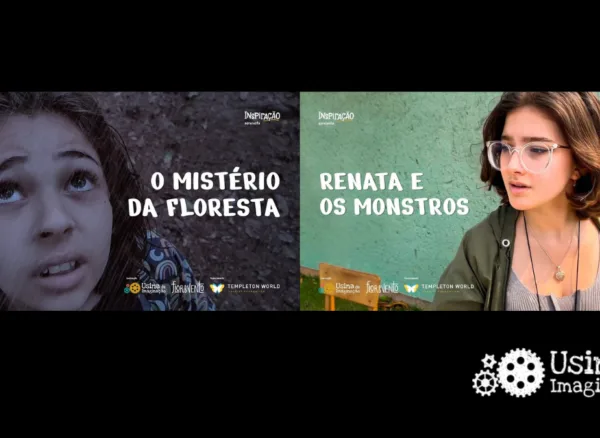
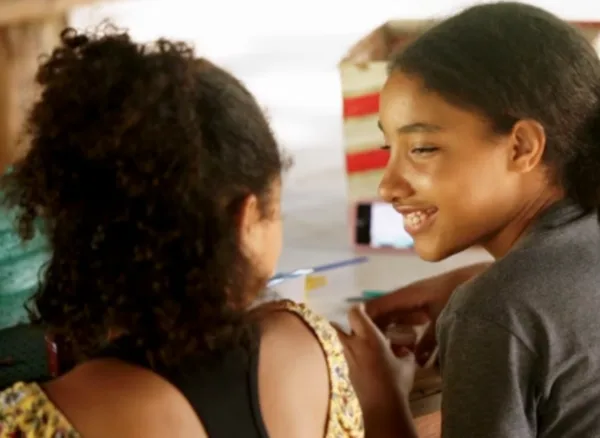
One TWCF-funded project, titled "The Other Side of the Other", brought children from very different worlds — kids from favelas and kids from affluent neighborhoods — together to create films. Working side by side, they wrote scripts, acted, filmed, edited, and composed music. Each story reflected the voices and lived experiences of the young creators, offering a rare exchange of perspective.
The participatory process was just as important as the finished films. Collaboration broke down social barriers and built trust across lines of race, class, and geography. “It was a powerful way of developing empathy,” Shaw says.
This work led Shaw and da Silva to explore: what kind of worldview makes this kind of connection possible in the first place?
That question shapes their second TWCF-supported project, "Dialógica: New Perspectives on Polarization", which falls under TWCF's Listening and Learning in a Polarized World program. It draws on the knowledge of Indigenous and Afro-Brazilian thinkers — many outside formal academic spaces — who bring valuable perspectives on empathy, pluralism, and living well with difference. The project looks at 'how people are trying to overcome separation, segregation, how we can feel you can talk with the other, the ways people find to be in contact, to be culturally involved with the other, more than only talking with the other, but talking with the body, talking with the sound, music," says da Silva.
Shaw explains that in many Amazonian cultures, a core value is the ability to see the world through "the eyes of another" or knowing “through the skin of another”, to walk in their shoes, eat their food, sing their songs. That embodied encounter, beyond theory or dialogue, becomes a way of knowing, and a way of relating. “Diversity isn’t a threat,” he says. “It’s a wealth.”
Da Silva adds that children often model this openness best. They arrive in the world ready to experiment, connect, and play without pretense. She says that raising and working with children has continually reshaped how she sees others, and herself. “When a child is born, we are not the same. We need to change ourselves. And it’s the same when the child goes to the community or school. You need to learn to be in contact with more people.”
That ability to grow through connection, and to view difference as an opportunity rather than a barrier, stands in sharp contrast to global trends toward polarization.
Building on these insights, Shaw and da Silva are working to take their study of how Brazilians sing and dance, eat together, tell stories, and practice rituals, and turn it into a practical resource. They envision a guide that could be used by city planners, neighborhood associations, and families. “We see it as a toolkit that can be useful to lots of different people,” Shaw says. “We generally in the United States talk about play with kids. In Brazil, all culture is play. In the same way that we play music in the United States in English, you also play Capoeira, you also play Samba, you also play theater. My sense is that the challenge of polarization comes a lot from that, from the lack of space, the way that our cities, the way that our mentality, the way that the internet has been constructed to make it difficult to play together.”
Listen to the podcast with the player at the top of this page to hear more insights from the team.
Built upon the award-winning video series of the same name, Templeton World Charity Foundation’s “Stories of Impact” podcast features stories of new scientific research on human flourishing that translate discoveries into practical tools. Bringing a mix of curiosity, compassion, and creativity, journalist Richard Sergay and host Tavia Gilbert shine a spotlight on the human impact at the heart of cutting-edge social and scientific research projects supported by TWCF.