* A Grant DOI (digital object identifier) is a unique, open, global, persistent and machine-actionable identifier for a grant.
Asian elephants (Elephas maximus) are socially-complex, intelligent mammals. Observational studies suggest they display complex emotions and cognition. However, well-controlled experiments to test elephant intelligence are remarkably limited. This project from Joshua Plotnik and team at Comparative Cognition for Conservation Lab at Hunter College (CUNY) aims to develop a comprehensive understanding of elephant intelligence (specifically cognitive flexibility) with a focus on uncovering the diversity in intelligences between individuals, and determining whether intelligence could be related to conflict with humans.
The project team will study wild elephants in Salakpra Wildlife Sanctuary (SWS), a human-elephant conflict (HEC) hotspot in Thailand. The Sanctuary, a 1,000 km2 protected habitat, is completely surrounded by agricultural land and cropfields. Most elephants stay inside the protected habitat, but many others live between SWS and the cropfields, regularly entering the latter to forage. These incursions result in direct conflict with humans, who often deter elephants from cropfields using aggressive methods like firecrackers and electric fencing.
Because these distinct elephant groups can be identified and tested within the habitats in which they live, the project aims to determine whether cognitive flexibility differs between them, and thus whether intelligence is an important factor influencing whether HEC might occur.
Across the animal world, diverse intelligences exist not only among species, but also among individuals within species. The project team hypothesizes that aspects of behavior and cognition covary across individuals, manifesting in distinct “cognitive styles,” and that targeting mitigation strategies to individual cognitive styles can lead to long-term reduction in HEC. The team will use a battery of experiments to measure innovative problem-solving, self- or inhibitory control, and learning, using apparatuses specially-designed for elephants’ unique non-visual sensory perspectives, and integrate these results with behavioral data already collected.
photo via: Comparative Cognition for Conservation Lab at Hunter College
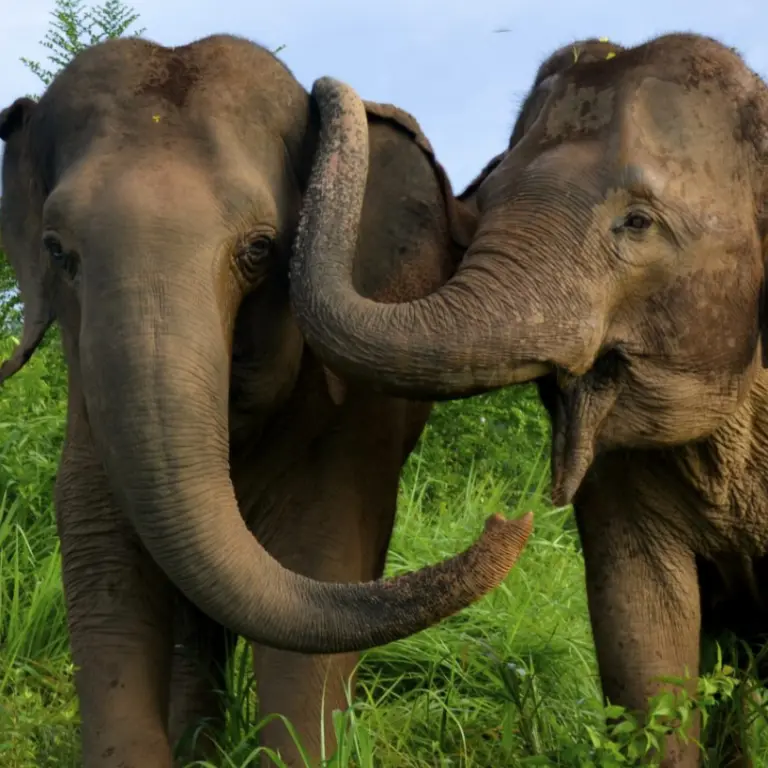
New research into how elephants think and learn is reshaping strategies for peaceful human–elephant coexistence.