New research into how elephants think and learn is reshaping strategies for peaceful human–elephant coexistence.
In this episode of Stories of Impact podcast, Dr. Joshua Plotnik, associate professor of psychology and director of the Comparative Cognition for Conservation Lab at Hunter College (CUNY), discusses what it really means to be an intelligent animal, why some elephants boldly raid crops while others stay deep in the forest, and how a better understanding of their minds could help protect both elephants and people.
Listen with the below player
Plotnik and his colleagues design carefully controlled experiments with captive elephants to probe cognitive flexibility, i.e., how individuals adapt when the rules change. In some tasks, elephants must learn where and how food will appear, sometimes working alone and sometimes alongside a partner. These puzzles suggest that elephants can handle uncertainty and coordination, and that different individuals approach the same problem in distinct ways.
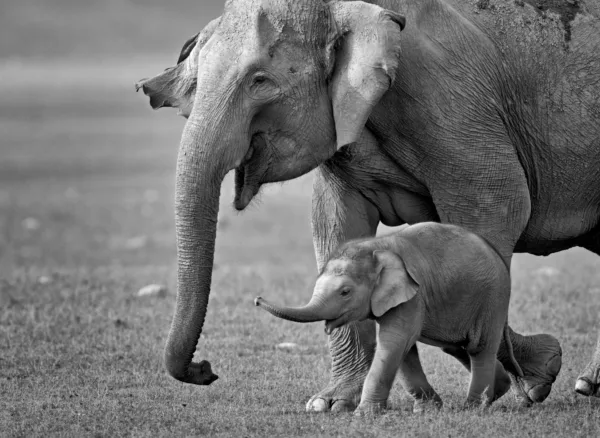
The team connects these lab-based insights to the collective intelligence of elephants in the wild. “They live in matriarchal family groups led by the oldest, most knowledgeable females,” Plotnik explains, and their cooperation centers on caring for calves, moving together across large landscapes, and protecting vulnerable group members from predators, not on teaming up to grab scarce food. That contrast helps him question how much standard lab games about sharing treats really capture what cooperation looks like in nature.
Plotnik emphasizes that the ultimate goal is to link cognition research to animals’ real-world choices. He says: “There's a very strong link between the study of intelligence and what's going on in the wild. A question that I've been really fascinated about is how can all of this research, that focuses on how different animals, not only between species, but within species, can tell us about how animals make decisions in the wild. One way of looking at this is individual differences in cognition. How is cognition expressed differently from one elephant to the next?”
In western Thailand's Salakpra Wildlife Sanctuary, a protected area surrounded by sugar cane, cassava, corn, and pineapple fields, those questions become urgent. Only a subset of elephants repeatedly leave the forest to raid crops, but farmers recognize these individuals by sight and behavior. They tell stories of elephants that learn to navigate fences, ignore homemade firecrackers, or manipulate taps and pipes, suggesting that some animals have distinctive “cognitive styles” and risk profiles that make them more likely to come into conflict with people.
Drawing on this, Plotnik's team is testing a “targeted personality” device: an elephant-proof, motion-activated system that can combine light, sound, and scent in different ways when elephants approach crops. Instead of a one-size-fits-all scare tactic, the device is meant to be tuned to how particular elephants, or types of elephants, respond, and varied over time so these highly intelligent animals do not simply get used to it.
Plotnik's and his colleagues' work are showing that elephants are thinking, feeling individuals, and that their different ways of thinking matter both for conservation work and for everyday life in farming communities.
Image: plotniklab.wordpress.com
View the related TWCF-funded projects here.
Find more about Diverse Intelligences here.
Built upon the award-winning video series of the same name, Templeton World Charity Foundation’s “Stories of Impact” podcast features stories of new scientific research on human flourishing that translate discoveries into practical tools. Bringing a mix of curiosity, compassion, and creativity, journalist Richard Sergay and producer Tavia Gilbert shine a spotlight on the human impact at the heart of cutting-edge social and scientific research projects supported by TWCF.