* A Grant DOI (digital object identifier) is a unique, open, global, persistent and machine-actionable identifier for a grant.
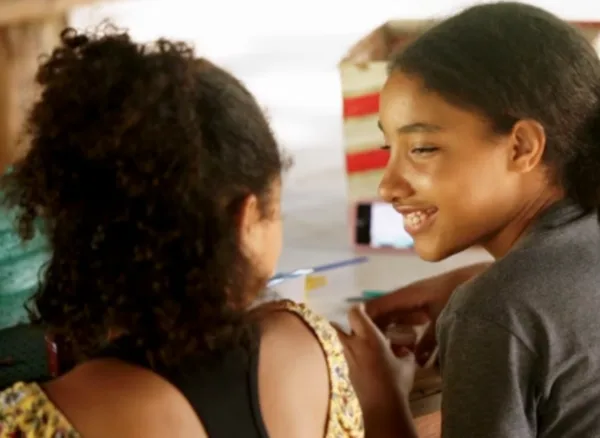
Project DEFY’s global network of community-led learning spaces are called Nooks, where learners of all ages design their own learning. There are no teachers, curricula, or exams; learning is driven by individual and collective context, needs, and curiosities. Nooks provide free access to technology, resources, and information, enabling people in marginalized communities to choose what they learn, why they learn, and how they learn. This bottom-up model challenges conventional education systems by asking how high-quality education can be delivered differently, and how freedom in learning modalities shapes agency and educational choices.
Since launching in Bangalore, India in 2018, Project DEFY has grown to 33 Nooks and Nook Hubs across six countries on three continents, reaching nearly 6,000 learners and more than 28,000 community members. Nooks are showing promising outcomes in knowledge, skills, livelihoods, and community cohesion, including the breaking of limiting self-beliefs and social norms. Nook Hubs combine a Nook with a growth office to demonstrate the model, support expansion into new geographies, enable local customization, and connect communities globally.
To support scale with evidence, Project DEFY established Research in Alternative Global Education (RAGE), an independent research division conducting in-depth studies of the Nook model. RAGE’s working papers examine community-led change, livelihood outcomes, and shifts in social and gender norms, alongside collaborative research that has produced peer-reviewed publications. The five-year vision expands research into socio-emotional learning, life skills, mental health, democratization of technology, and the pedagogy of self-designed learning, using rigorous methods including experimental and quasi-experimental designs and behavioral science. The vision unfolds in three phases: building foundations and the RAGE Alliance; scaling with external researchers, A/B testing, RCTs, and longitudinal studies; and localization with independent validation, community-led research, and knowledge products. This one-year capacity-building grant will strengthen methods, partnerships, dissemination, and grassroots co-authorship, advancing an independent research ecosystem that centers human agency.