The rise of hybrid work is transforming the labor market in ways few expected.
Economist Dr. Nicholas Bloom joins Stories of Impact podcast to discuss his findings on how remote work has been reshaping the economy and helping humans thrive.
With a TWCF-funded project, Bloom and his team have been looking at how hybrid work models affect employee wellbeing, business performance, and broader societal outcomes.
Listen with the below player
What began as a pandemic necessity has become one of the most profound shifts in work, equity, and innovation in decades.
Dr. Bloom, who has tracked work-from-home (WFH) trends for over twenty years, describes the COVID-driven shift as one of the largest changes to the labor market since the 1940's. He compares the moment to the WWII-era influx of women into the workforce, which helped permanently change expectations around gender and labor. Similarly, the pandemic forced millions to work from home — and many never fully returned.
According to Bloom, the post-pandemic norm in the US is a hybrid model (typically three days in the office and two days remote.) This new rhythm, he says, has reshaped daily life. “We’re in this intermediate hybrid form… and that is an absolutely massive revolution which has affected everything — cities, sports, real estate, crime, taxes, politics, all kinds of things.”
Not so long ago, remote work was stigmatized. “I gave a TEDx talk in 2017 on WFH and you'd hear the phrase a lot, 'shirking from home' and 'working remotely, remotely working' because people were so skeptical that you actually didn't work!” In contrast, today it’s a symbol of flexibility and status. “That’s 180-degree change… from something people were a little bit embarrassed about before the pandemic to now something that managers and professionals are kind of happy to show off," says Bloom.
While some CEOs have claimed returning to the office is essential for employee wellbeing, Bloom’s research challenges this, and backs up the business case for hybrid work. One key finding from a large-scale study shows that letting employees work from home just two days per week led to a 35% drop in quit rates. “It’s hugely profitable… That’s kind of the strap line of why 80% of Fortune 500 companies currently have hybrid professionals and managers," he notes.
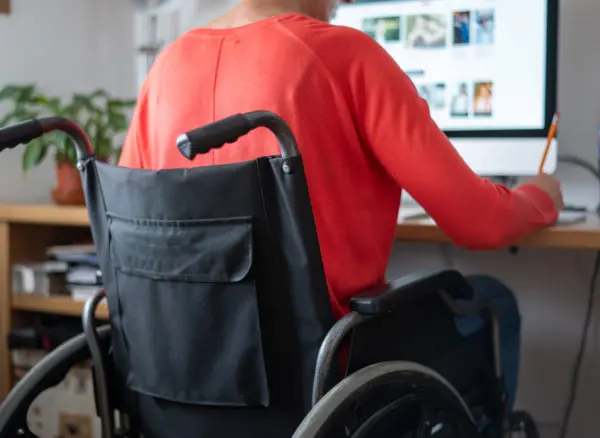
The effects go beyond workplace satisfaction. Hybrid and remote flexibility have made it easier for people with disabilities to find and retain work.
“There are about 30 million Americans with a disability. More than half of them are above age 50.” Up until the pandemic only 20% of this population worked. Since then, "work rates for people with a disability have absolutely surged, and it looks like work from home’s driving a lot of this.”
Remote work has also changed where people live. With more flexibility, workers are moving away from dense city centers and into the suburbs. “We’ve seen about a million Americans leave city centers of big cities," Bloom shares.
Surprisingly, Bloom notes, wage inequality actually narrowed during the first three years of the pandemic. “From 2020 to 2023, inequality in America actually fell...Folks that cannot work from home have seen their pay rise by about 10% faster than folks that can.”
Looking ahead, Bloom sees continued momentum behind remote and hybrid arrangements. “The long-run work-from-home levels are clearly going to rise. That’s a very easy prediction to make,” he says.
Find out more about the related TWCF-supported research project.
Watch the related video: The Work From Home Revolution with Nicholas Bloom (video)
The “Stories of Impact” podcast explores cutting-edge research at the intersection of spirituality and science. With a grant from TWCF, performer, and producer Tavia Gilbert and her team at Talkbox Productions craft each episode, adapting interviews conducted by journalist Richard Sergay his award-winning video series of the same name into immersive audio stories. The podcast has received multiple honors, including the American Writing Awards’ Science Podcast of the Year.