This research finds specially-designed virtual reality (VR) experiences significantly increase empathy and compassion, with effects persisting for at least 6 months.
Dr. Eugene Ohu at his team at Virtual Human Computer Interaction (VHCI) Lab is using virtual reality (VR) to explore a powerful question: Can "stepping into someone else’s shoes" reduce bias by inspiring greater compassion and empathy?
He joins this Stories of Impact podcast to share how an immersive gaming experience developed with support from TWCF is encouraging Nigerian teens to cultivate prosocial behaviors, offering a new way to help bridge the country’s long-standing ethnic divides.
Listen wiTh the below player
Ohu is a research scholar at Gannon University in Pennsylvania, an associate professor at Lagos Business School, as well as director and principal investigator at VHCI Lab in Nigeria. Nigeria is a country of more than 230 million people with a complicated past that includes extreme tribalism; divided geography; cultural, social, and religious diversity; geopolitical conflict over oil wealth; and a horrific civil war and genocide that killed millions.
”There is a lot of division and stereotypical behavior between the ethnic groups and a lot of discriminations," says Ohu during the podcast. "For a long time I have been pondering, is it possible to have a united Nigeria?”
"When something happens to someone from another ethnic group and we hear it in the news, and it sounds like it's happening to someone else,” says Ohu. "I think we are able to remain indifferent to the plight of other ethnic groups because we don't know what it feels like to be that person." Ohu wanted to challenge that indifference, and after trying VR himself, he believed immersive storytelling might offer a way in.
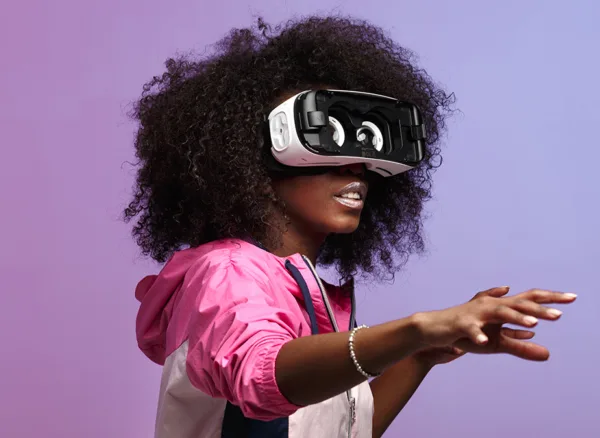
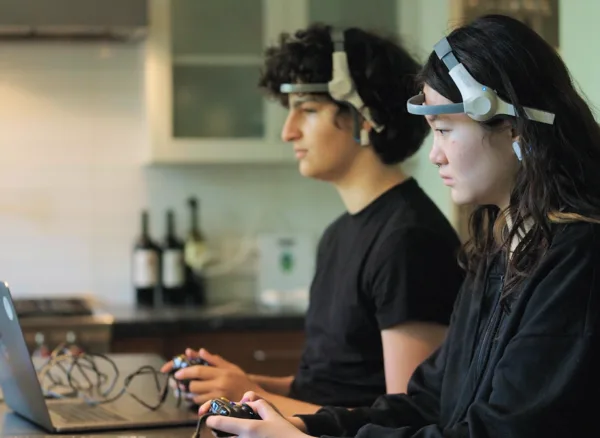
With this as inspiration, Ohu developed a study to teach children, ages 13 to 18, empathy and compassion through a specially-designed VR program. Gamified in order to attract kids to engage in it, Ohu and team designed four language versions of the VR experience, including versions designed for Igbos, Hausas, Yorubas, and a Niger Delta version representing the other minority groups. To join a VR room, players cannot enter into an experience of their own ethnic group, so, for example, a Hausa must enter the VR experience of a Yoruba, an Igbo, or someone from the Niger Delta. For each language version, the researchers also offered either an observed version, which for the player offers a third-person perspective, or an embodied version, where players become the character. And there’s a role model version, as well, which includes in a third person perspective a teacher who joins the scene.
How the Study Worked
Ohu and his team interviewed both teens and adults to understand what ethnic discrimination actually looks like on the ground. The scenarios used in the VR experience were built from their stories, not fictionalized or exaggerated, but drawn directly from lived reality “We were conscious of not causing distress, but, at the end, what these kids had experienced were worse than we had imagined,” Ohu shares.
The story students experienced follows a young girl who becomes the target of verbal and physical abuse based on her identity. Students could not experience their own group’s version — they had to embody or observe someone else’s experience.
Three types of VR experiences were tested:
Each was designed to measure how the level of immersion affected students’ emotional and moral response.
The study was conducted in public secondary schools across Lagos, with participants aged 13–18. Students completed pre- and post-experience surveys measuring empathy and compassion, and were followed up again two, four, and six months later. A control group received no VR intervention.
Students also wrote two letters after the experience: one to the fictional character who had been abused, and one to the school principal. These writings revealed just how deeply the students identified with what they saw Many letters also expressed frustration that no adults intervened during the simulated abuse, highlighting students’ desire for moral leadership and protection.
What the Research Found
Students in the Embodied and Observed groups showed significant increases in empathy and compassion compared to the control group. These gains persisted at least six months after the intervention.
Some students changed real-life behavior, stepping in to intervene when they witnessed others being mistreated. Some students cried during the experience, and many asked to do it again, even though it was difficult to watch.
More Than Just a Youth Intervention
While the project focused on teens, Ohu believes adults, and especially people in positions of power, could benefit just as much from this type of immersive empathy training. “I would like to put more government people into this experience," he says. "When you get [into power], you often favor your ethnic group and ignore all the others," but, he explains, VR is a tool that can disrupt this pattern and help decision-makers better understand the lives of those outside their own group.
Toward a More Empathetic Society
Ohu’s goal is to scale the project across Nigeria. While fully immersive VR requires expensive headsets, his team found that the Observed version also works and can be delivered with low-cost phone-based viewers. “Rather than hope that schools can afford a $250 headset... with just a $10 cardboard and a phone, this VR experience can go to many more schools," Ohu notes.
He also hopes to adapt the program to other challenges beyond identity-based discrimination. His team is now exploring similar experiences that simulate living with depression — another stigmatized topic in Nigeria.
The research changed not only the students but also changed Ohu himself. “I thought I knew Nigeria, but having to work on this game, having to talk to people from different ethnic groups... I would like to think it made me more empathetic," he says.
What stood out most was how much Nigerians from different backgrounds actually share. “Each of us has a name that has a meaning for us. Even those differences really bring us together,” says Ohu. He sees empathy not just as a way to reduce conflict, but as a foundation for flourishing: “A more empathetic person will experience a greater flourishing themselves, and will help the other person experience it.”
Built upon the award-winning video series of the same name, Templeton World Charity Foundation’s “Stories of Impact” podcast features stories of new scientific research on human flourishing that translate discoveries into practical tools. Bringing a mix of curiosity, compassion, and creativity, journalist Richard Sergay and host Tavia Gilbert shine a spotlight on the human impact at the heart of cutting-edge social and scientific research projects supported by TWCF